J-01Finance
Invoice matching
Reads supplier invoices, matches them to purchase orders and receipts, and sends mismatches to a person.
How it worksharmoni picks one workflow, like invoice matching or ticket triage, builds the system that runs it on your data, and hands it to your team. Measured before and after.
| Check | What it found | Count |
|---|---|---|
| Bill of lading | The wrong one was attached | 1 |
| Dangerous goods | Declared “no”; the bill of lading lists UN 3166 | 1 |
| Invoice count | 1 declared, 10 in the shipment | 1 |
| Delivery place | Wrong on five invoices | 5 |
| Country of origin | Wrong on three items | 3 |
| Duplicate line | One item listed twice | 1 |
It reads the work as it arrives, does what follows your rules, and sends anything unusual to a person with the reason. Nothing is decided silently.
How long each stage takes depends on the job. The quote spells it out.
We sit with the people who do the work, time it, and collect real examples.
You get: the baseline and a fixed price.
We build the system on your data, inside your tools, with a check on every step that can fail.
You get: a system tested on last month’s work.
It runs on live work next to your team. Every exception goes to a person.
You get: the before and after numbers.
Your team runs it. Everything sits in your accounts.
You get: us on call while your team takes over.
We start with one, prove it, then take the next. See every service
Reads supplier invoices, matches them to purchase orders and receipts, and sends mismatches to a person.
How it worksReads incoming tickets, tags and routes them, and drafts the first reply for an agent to send.
How it worksTurns orders that arrive by email or PDF into entries in your ERP.
How it worksPulls the numbers from your systems into the weekly operations report.
How it worksCompares incoming contracts with your standard terms and lists every difference.
How it worksAnswers staff questions from your own documents and links the source.
How it worksTwo client jobs and one product of our own. The numbers are the ones we measured; clients are named only where they agreed.
Customs declarationsCustoms broker · Bolivia · pilot on a real shipment
Before: the broker’s team read every invoice, packing list and bill of lading and typed each line of the import declaration by hand, with a tariff code for each one.
What we built: a system that reads the shipment’s documents, gives every line a code from the 2026 tariff book, runs 45 checks, and fills the official declaration for a person to review before anything is filed.
Sales and stock by voiceNoah Play · toy shop · in daily use
Before: the owner kept sales and stock in Excel and on paper. She 3D-prints much of what she sells, so she needs to know her best sellers to decide what the printer makes next.
What we built: a phone app where she holds the sun and says what happened: “vendí dos pelotas y un oso de peluche, pagó con QR” (“sold two balls and a teddy bear, paid by QR”). The AI turns it into sales, restocks and price changes, asks when it isn’t sure, and saves nothing until she taps to confirm. It works offline.
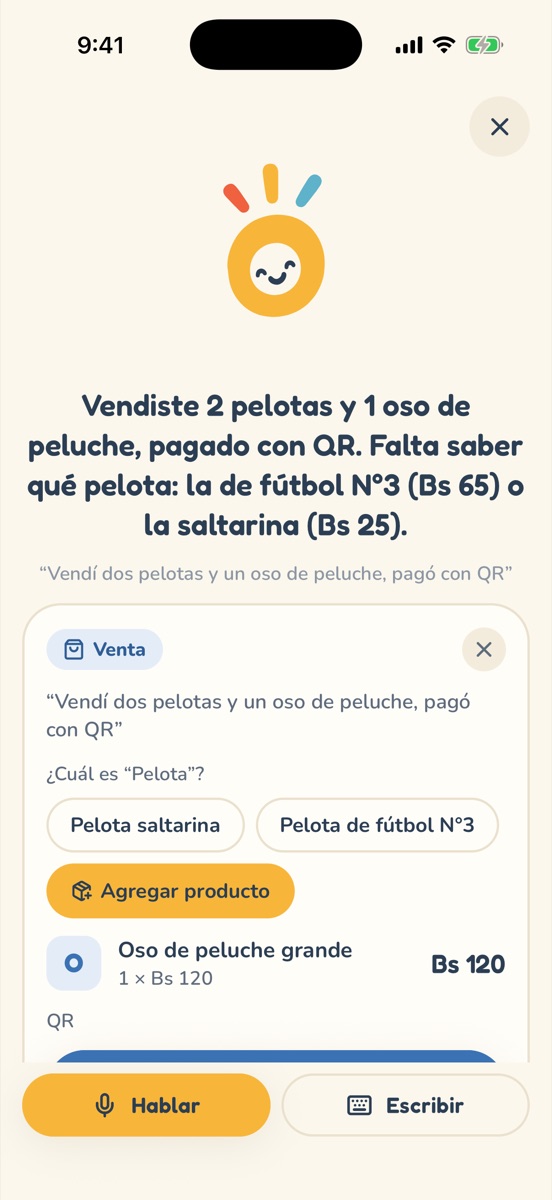
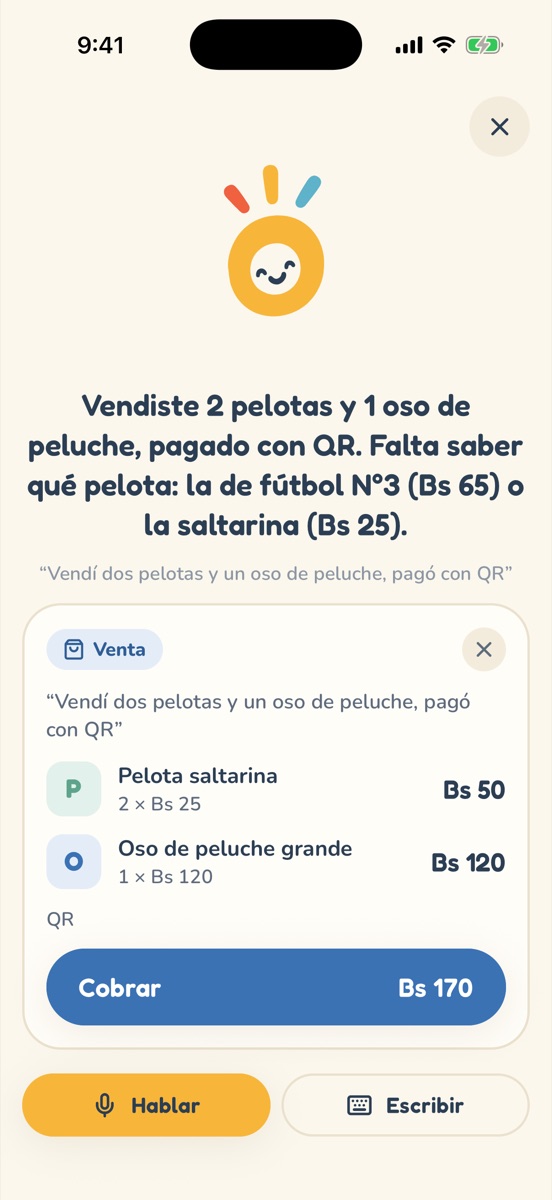
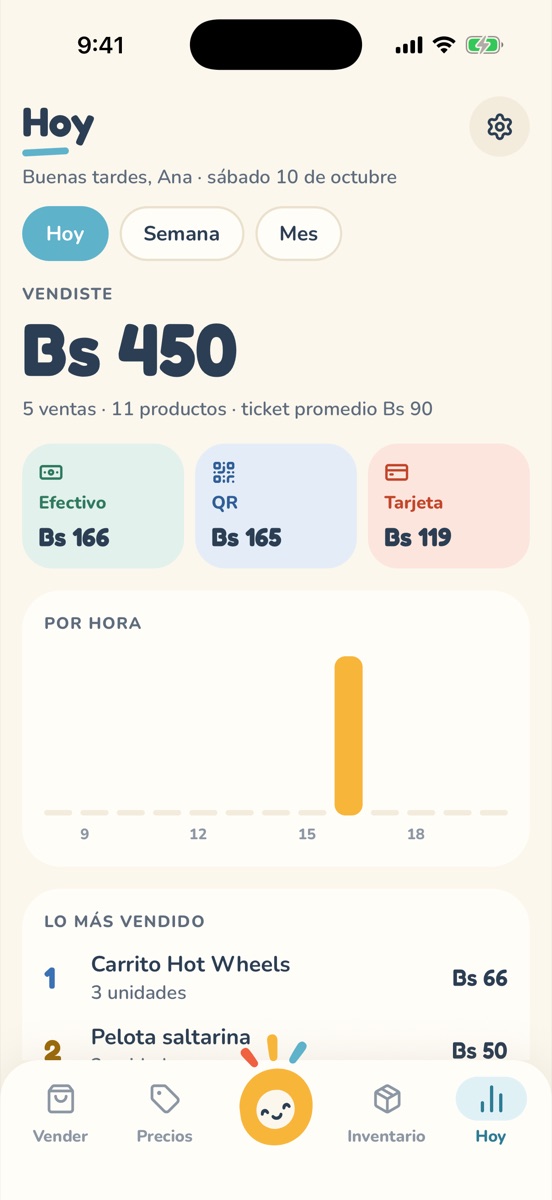
Screens from the app, with sample toys.
E-invoicingOur own product · authorized by Bolivia’s tax service
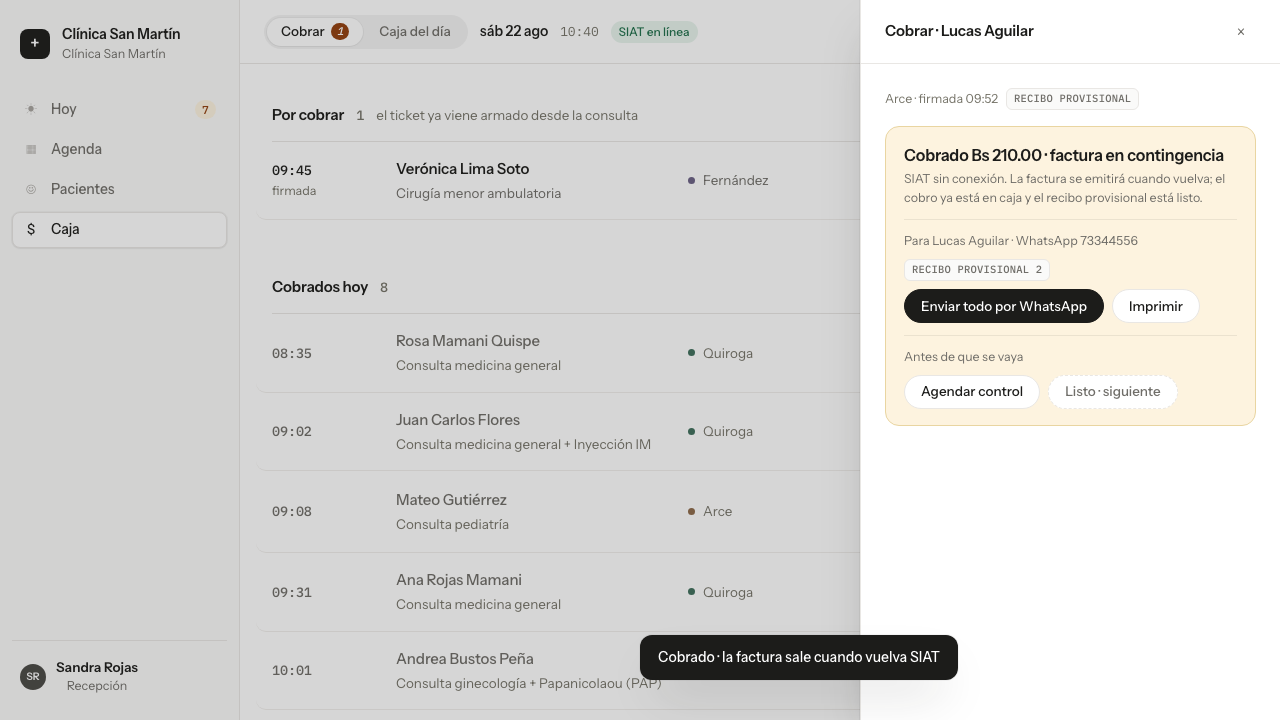
In Bolivia every sale needs an invoice signed and accepted by the tax service, live. Ours numbers, signs and submits each one, and when the tax service is down it keeps issuing and catches up on its own.
The person on your first call is the person who builds your job.
Checks: the baseline, whether the job is worth doing, and every step that can fail before it ships.
We measure the baseline and agree the target with you before anything is built. If the numbers say the job won’t beat it, you hear it then, not after the build. The quote says what each stage costs.
No. Measuring shows what’s usable. We fix what the job needs and nothing more.
It depends on the job, and the quote says which. When we build a system for you, it’s usually yours, in your accounts. When the job runs on a product of ours, like our e-invoicing engine, you use it under a licence instead.
Pick the workflow that takes your team the most hours. In 30 minutes we’ll tell you whether it’s a good first job, how we’d measure it, and a price range.
Discovery call30 min · Google Meet